How to Make Authentic Korean Beef Bulgogi: The Ultimate Guide to Perfect Korean BBQ at Home
Korean Beef Bulgogi is more than just a dish—it’s a celebration of Korean culinary heritage, skillfully marrying delicate beef slices with a symphony of sweet, savory, and smoky flavors. Revered for its tender texture and signature marinade, bulgogi remains one of the most recognized and beloved Korean recipes worldwide. In this comprehensive professional guide, you will learn how to select the ideal beef, master the art of marination, and execute both traditional and modern cooking techniques to deliver restaurant-quality results at home. Whether you’re a home cook or a culinary professional, this tutorial will equip you to create authentic, memorable bulgogi every time.
What is Korean Beef Bulgogi?

The word bulgogi (불고기) translates to “fire meat,” referencing both its ancient grilling roots and its iconic, slightly charred edges. Originating from Korea’s Goguryeo dynasty, bulgogi has evolved over centuries from a noble dish enjoyed by royalty to a modern staple featured everywhere—from humble street food stalls to Michelin-starred restaurants. The secret to bulgogi’s universal appeal lies in its marinade: a nuanced balance of soy sauce, sugar, aromatics, and Asian pear, which both tenderizes the beef and builds complexity.
The Science Behind Bulgogi
What sets bulgogi apart is its careful engineering of taste and texture. Thinly sliced, well-marbled beef absorbs the marinade rapidly, and the inclusion of fruit enzymes (traditionally Korean pear, but Fuji apple is a modern substitute) ensures that each bite is succulent and packed with flavor. This preparation not only enhances tenderness but also encourages caramelization, creating those crave-worthy crispy edges.
Why Make Bulgogi at Home?
While Korean BBQ restaurants are renowned for their grilling theatrics, making bulgogi at home gives you total control over quality, ingredient customization, and portion sizes. With the right approach, even a novice cook can replicate the richness and aroma that defines the best bulgogi. Home preparation also allows you to tailor the recipe—incorporating preferred protein cuts, adjusting sweetness, or infusing heat with Korean chili paste (gochujang).
Ingredients of Korean Beef Bulgogi

Achieving authentic bulgogi requires thoughtful ingredient selection. Here is the classic lineup for a four-serving recipe:
| Ingredient | Amount | Notes |
|---|---|---|
| Beef (Ribeye/Sirloin/Top Round) | 1 lb (450 g) | Well-marbled, thinly sliced against the grain |
| Soy sauce | 4 tbsp (60 ml) | Naturally brewed for umami depth |
| Sugar | 2 tbsp (25 g) | White or light brown for balanced sweetness |
| Korean/Asian pear or Fuji apple | 1/3 medium (grated) | Acts as a tenderizer, adds subtle fruitiness |
| Garlic | 4 cloves (minced) | Fresh only, no substitutes |
| Ginger | 1 tsp (minced) | Adds brightness and mild heat |
| Sesame oil | 1 tbsp (15 ml) | Toasted, for nutty aroma |
| Green onions | 2 stalks (sliced) | White and light green parts |
| Black pepper | 1/4 tsp (ground) | Freshly ground preferred |
| Sesame seeds | 1 tsp (toasted) | For garnish and texture |
| Mirin or Rice Wine | 1 tbsp (optional) | Adds depth and mild sweetness |
| Gochujang | 1 tsp (optional) | For subtle heat, authentic but optional |
| Onion | 1/2 medium (sliced) | Adds natural sweetness and texture |
Pro tip: Place beef in the freezer for 20–30 minutes before slicing to make ultra-thin cuts easier and more consistent.
How To Make Korean Beef Bulgogi
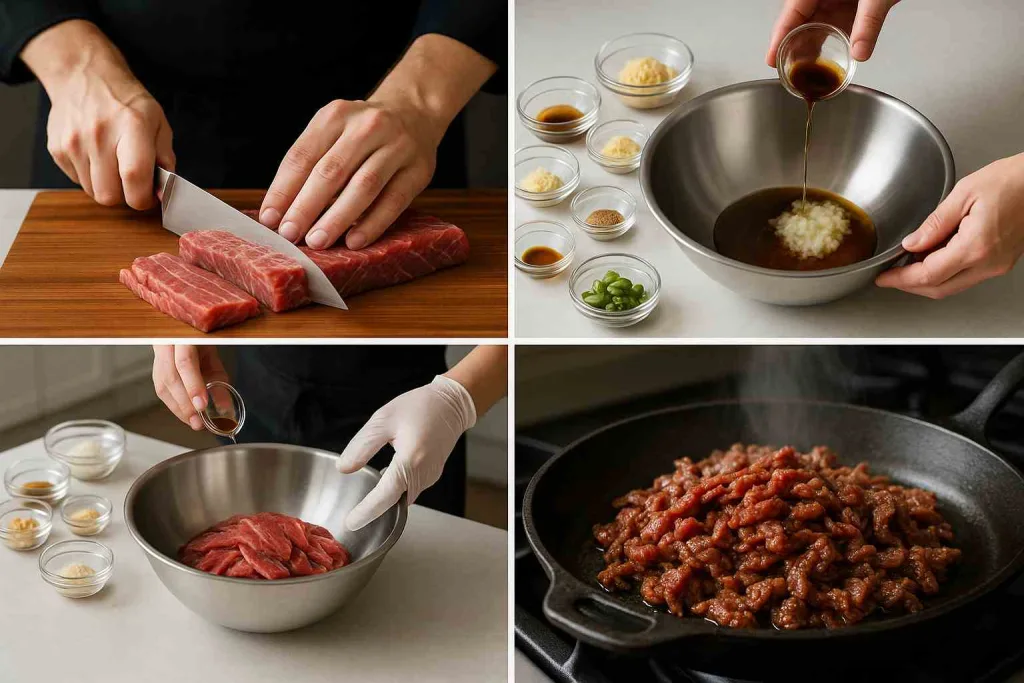
Step 1: Slicing the Beef
- Choose the right cut: Ribeye or top sirloin is ideal due to their marbling and tenderness.
- Freeze slightly: For easier slicing, chill beef until firm but not solid.
- Slice thinly: Using a sharp knife, cut across the grain into 1/8-inch (3mm) slices. Uniform thickness is crucial for even cooking and ideal texture.
Step 2: Preparing the Marinade
- Mix base ingredients: In a large non-reactive bowl, whisk together soy sauce, sugar, sesame oil, mirin (if using), minced garlic, and ginger.
- Add fruit: Grate Asian pear or apple directly into the bowl; this provides both sweetness and enzymatic tenderization.
- Fold in aromatics: Add green onions, onion slices, and black pepper. If you like a hint of heat, add gochujang.
- Combine beef and marinade: Add beef slices to the bowl. Using clean hands or tongs, gently toss until each piece is thoroughly coated.
Step 3: Marination
- Time: Marinate in the refrigerator for at least 30 minutes; for best flavor and tenderness, allow 2–4 hours. Avoid marinating longer than 8 hours to prevent the meat from becoming too soft.
Cooking Instructions
Method 1: Pan Searing
- Preheat skillet: Use a heavy cast-iron or stainless-steel skillet over high heat until just beginning to smoke.
- Add oil: Lightly brush or spray the pan with a neutral oil (e.g., canola).
- Cook in batches: Arrange beef in a single layer, without crowding, and sear for 1–2 minutes per side. Allow natural caramelization to occur.
- Drain & rest: Transfer to a plate lined with paper towels. Repeat with remaining meat.
Method 2: Grilling
- Preheat grill: Set to medium-high (450°F/230°C).
- Oil grates: Prevent sticking by brushing with oil.
- Grill beef: Cook slices for 1–2 minutes per side, just until grill marks appear and edges are crisp.
- Serve immediately: Keep cooked bulgogi warm on a platter as you grill subsequent batches.
Chef’s Note: Both cooking methods work beautifully. Pan searing is convenient for home kitchens, while grilling imparts a more pronounced smoky flavor, closer to traditional Korean BBQ.
Cook and Prep Times
| Activity | Time (minutes) |
|---|---|
| Slicing beef | 15 |
| Preparing marinade | 10 |
| Marination | 30–240 |
| Cooking | 10 |
| Total | 1–4 hours |
Active hands-on time is typically under 40 minutes.
Nutrition Information (Per Serving)
| Nutrient | Amount |
|---|---|
| Calories | 360 kcal |
| Protein | 28 g |
| Total Fat | 18 g |
| Saturated Fat | 5 g |
| Carbohydrates | 14 g |
| Sugars | 9 g |
| Sodium | 1200 mg |
| Cholesterol | 75 mg |
| Fiber | 1 g |
| Iron | 3.2 mg |
Nutrition values are estimates and can vary based on ingredient brands and serving sizes.
Serving of Korean Beef Bulgogi
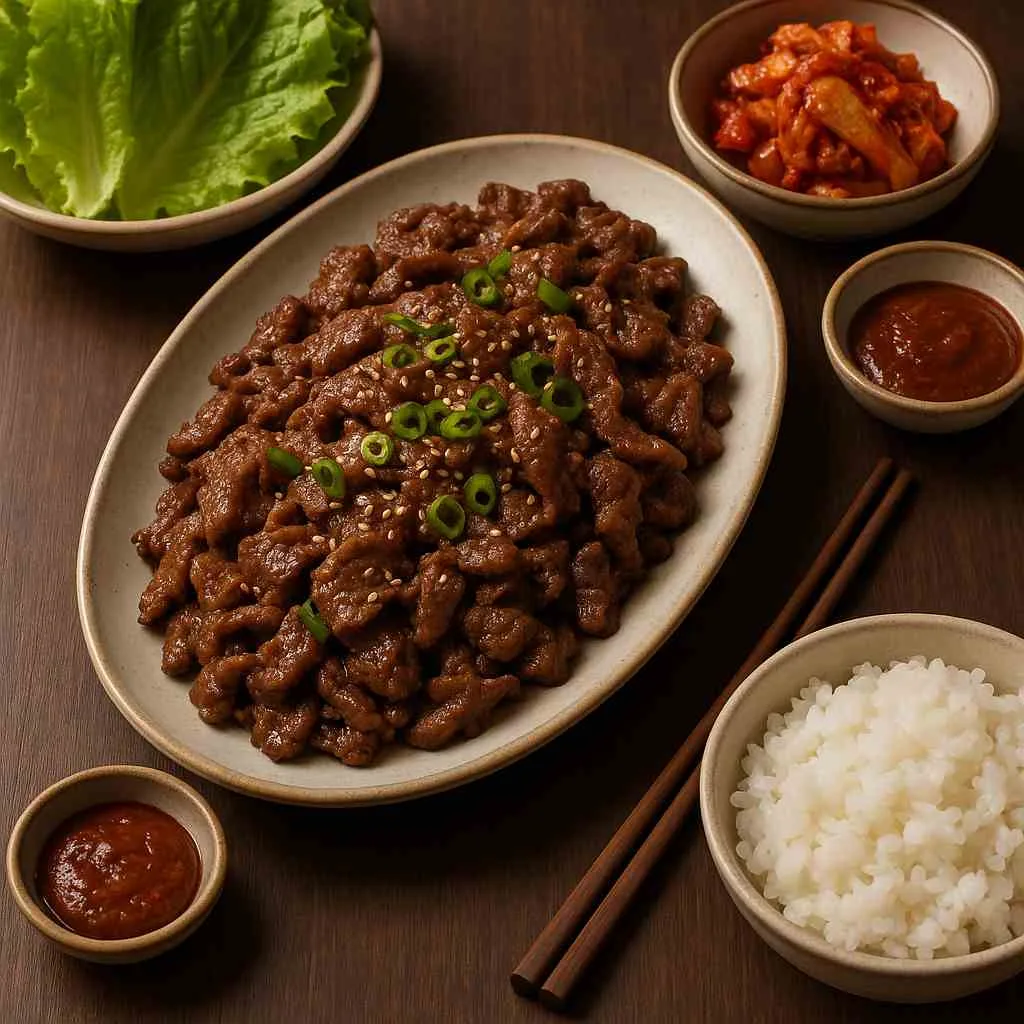
Traditional:
Serve bulgogi with steamed short-grain white rice, an array of Korean side dishes (banchan), and lettuce leaves or perilla for wrapping. Accompany with kimchi, pickled radish, and ssamjang (Korean dipping sauce) for a truly authentic experience.
Contemporary:
- Bulgogi Bowls: Serve over rice with sautéed vegetables and a fried egg for a modern Korean rice bowl.
- Fusion Tacos: Fill corn tortillas with bulgogi, shredded cabbage, and a drizzle of gochujang mayo.
- Stir-Fry: Add sliced bell peppers, carrots, and mushrooms for a hearty stir-fry variation.
Garnishing:
Finish with extra toasted sesame seeds, chopped green onions, and a drizzle of sesame oil for added aroma and visual appeal.
Chef’s Pro Tips for Perfect Bulgogi
- Meat selection matters: Quality, marbling, and even slicing define bulgogi’s tenderness. Invest in the best beef your budget allows.
- Marinade balance: Taste your marinade before adding beef. Adjust sweetness, saltiness, or acidity for balance.
- Don’t over-marinade: Fruit enzymes work quickly. Longer marination risks mushy texture.
- High heat is key: Whether grilling or pan searing, use high heat for caramelization without drying out the beef.
- Serve immediately: Bulgogi is best enjoyed hot, directly after cooking.
(FAQs)
Can I use other proteins?
Is bulgogi spicy?
What if I can’t find Asian pear?
Can I make bulgogi ahead?
Conclusion
Korean Beef Bulgogi is an accessible, crowd-pleasing dish that brings together the best of Korean barbecue traditions and modern culinary science. By focusing on quality ingredients, precise technique, and balanced flavors, you can deliver a bulgogi experience at home that rivals the best Korean restaurants. Serve it as the centerpiece of a family dinner, a festive party dish, or a flavorful weeknight meal—you’ll be rewarded with every tender, savory bite.