How to Make Authentic Kung Pao Chicken | Classic Sichuan-Style Recipe
Kung Pao Chicken is one of the most beloved Chinese stir-fry dishes, recognized worldwide for its bold flavors, balance of sweet, savory, spicy, and tangy notes, and its delightful combination of tender chicken, crunchy peanuts, and vegetables. While it has been adapted in many cultures, learning to make an authentic version at home allows you to truly appreciate the harmony of flavors in this classic dish.
This guide will walk you through everything: from the background of Kung Pao Chicken, to the ingredients you’ll need, step-by-step cooking instructions, nutrition, pro tips, and variations. By the end, you’ll have the confidence to recreate restaurant-quality Kung Pao Chicken in your own kitchen.
Overview of Kung Pao Chicken
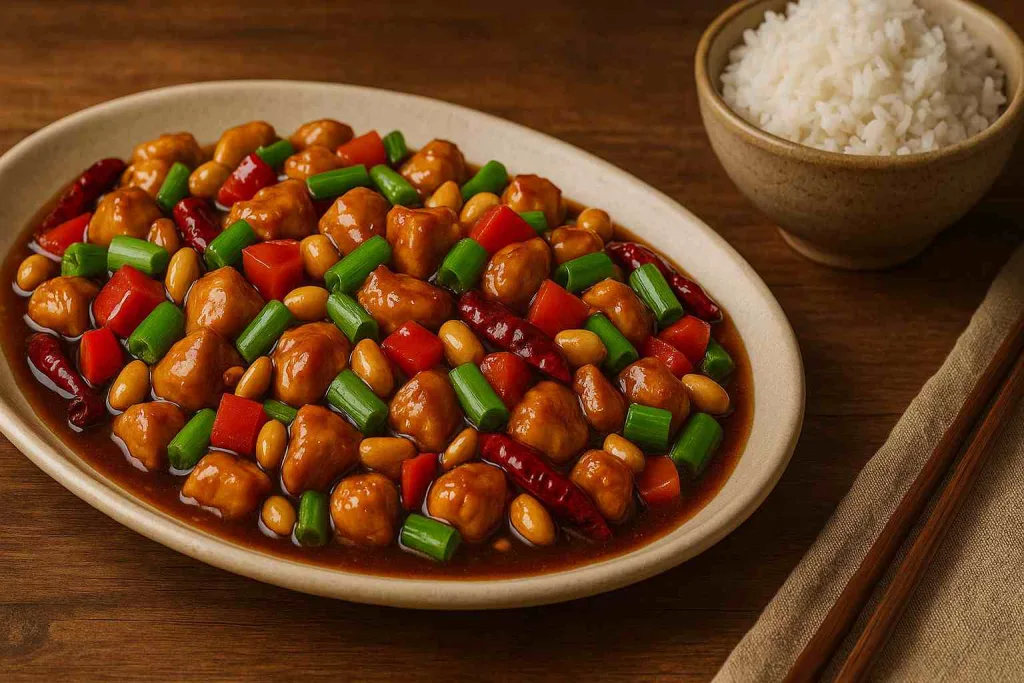
Kung Pao Chicken (宫保鸡丁, Gōng Bǎo Jī Dīng) originates from Sichuan province, a region famous for its spicy and numbing cuisine. The dish is named after Ding Baozhen, a Qing Dynasty governor of Sichuan, whose official title was “Gong Bao,” hence the name.
The dish features marinated chicken pieces stir-fried with dried red chilies, Sichuan peppercorns, peanuts, and a savory sauce made with soy sauce, vinegar, and a touch of sugar. What makes it special is the “málà” flavor (麻辣)—a unique sensation of spicy heat combined with the numbing tingle of Sichuan peppercorns.
Served over hot steamed rice, Kung Pao Chicken is a complete meal that delights the senses and showcases the artistry of Sichuan cuisine.
Ingredients for Kung Pao Chicken

Here’s a complete ingredient list for an authentic version:
For the Chicken Marinade:
- 1 lb (450 g) boneless, skinless chicken breast or thighs, diced into ¾-inch cubes
- 1 tbsp light soy sauce
- 1 tsp Shaoxing wine (or dry sherry)
- 1 tsp cornstarch
For the Stir-Fry:
- 3 tbsp vegetable oil (peanut oil preferred)
- 8–10 dried red chilies (mild to hot, depending on spice preference)
- 1 tsp Sichuan peppercorns
- 3 cloves garlic, minced
- 1-inch knob fresh ginger, minced
- ½ cup roasted unsalted peanuts
- ½ red bell pepper, diced
- ½ green bell pepper, diced
- 2 scallions, sliced into 1-inch sections
For the Sauce:
- 1½ tbsp light soy sauce
- 1 tbsp dark soy sauce
- 1 tbsp black Chinese vinegar (or balsamic vinegar as a substitute)
- 1 tbsp Shaoxing wine
- 1½ tbsp sugar
- 1 tsp cornstarch
- ¼ cup chicken broth or water
How To Make Kung Pao Chicken
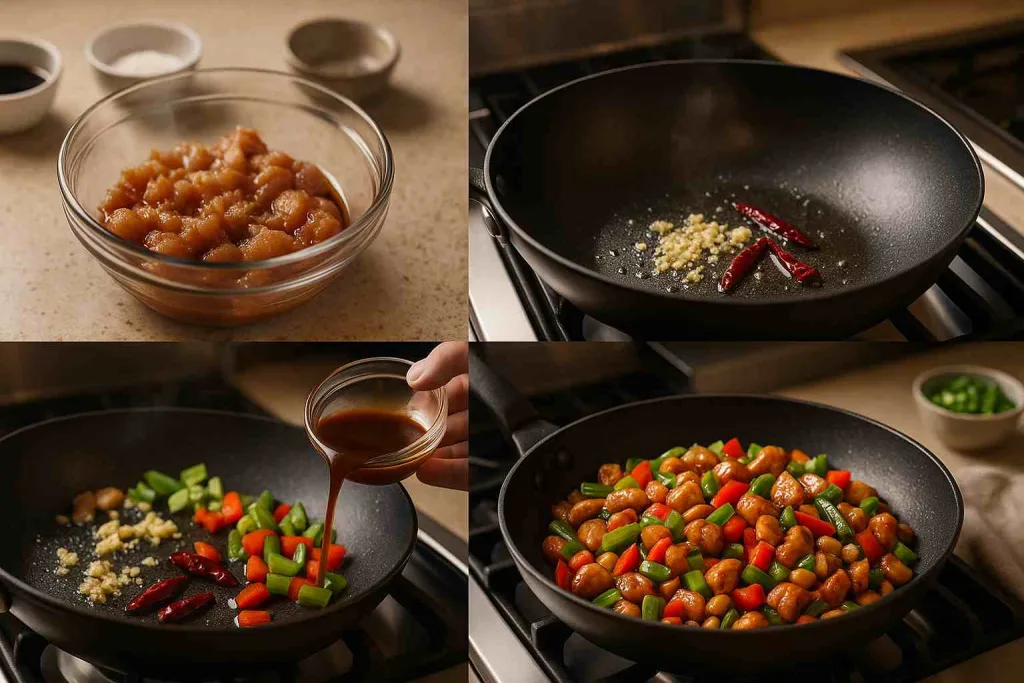
The magic of Kung Pao Chicken lies in the preparation. A successful stir-fry depends on having everything prepped and ready—this is called mise en place. Once the wok is hot, everything happens in minutes.
Step 1: Marinate the Chicken
- Place diced chicken into a bowl with soy sauce, Shaoxing wine, and cornstarch.
- Mix well and let sit for 15–20 minutes.
- This step tenderizes the chicken and gives it a velvety texture when stir-fried.
Step 2: Prepare the Sauce
- In a small bowl, whisk together light soy sauce, dark soy sauce, vinegar, Shaoxing wine, sugar, cornstarch, and broth.
- Set aside. This sauce should be glossy, savory, sweet, and tangy.
Step 3: Fry the Chilies and Peppercorns
- Heat oil in a wok until hot but not smoking.
- Add dried red chilies and Sichuan peppercorns, stir-fry until fragrant (20–30 seconds).
- Be careful not to burn them; burnt spices taste bitter.
Step 4: Cook the Chicken
- Add marinated chicken to the wok, stir-fry on high heat until lightly golden and just cooked through.
- Remove chicken and set aside.
Step 5: Build the Stir-Fry
- In the same wok, add garlic and ginger, quickly stir until aromatic.
- Add diced peppers and scallions, stir-fry for 1–2 minutes.
Step 6: Add Sauce and Peanuts
- Return chicken to the wok.
- Pour in the sauce, stirring until it thickens and coats everything.
- Toss in roasted peanuts for crunch.
Step 7: Serve
- Transfer to a serving dish.
- Garnish with extra scallions or fresh chilies if desired.
- Serve hot with steamed jasmine rice.
Cook & Prep Times
- Prep Time: 20 minutes
- Cook Time: 10 minutes
- Total Time: 30 minutes
- Servings: 4
Nutrition Information (per serving, approx.)
- Calories: 385 kcal
- Protein: 30 g
- Fat: 18 g
- Carbohydrates: 25 g
- Fiber: 3 g
- Sugars: 8 g
- Sodium: 780 mg
Serving of Kung Pao Chicken

Serving Authentic Kung Pao Chicken is an experience that blends bold flavors with elegant presentation. Tender chicken cubes are stir-fried with dried chilies, Sichuan peppercorns, and crisp vegetables, then coated in a glossy, savory-sweet sauce that captures the essence of Sichuan cuisine. Garnished with crunchy peanuts and fresh scallions, each bite delivers the perfect balance of heat, aroma, and texture. Served hot with steamed jasmine rice, this dish is both comforting and refined, making it an excellent choice for an impressive lunch or dinner table.
Pro Tips for Success
- Wok Hei: Use a carbon steel wok on high heat for smoky, restaurant-style flavor.
- Control the Heat: Toast chilies and peppercorns gently—burning them will ruin the dish.
- Velveting Chicken: The cornstarch marinade makes the chicken silky and juicy.
- Balance the Sauce: Adjust sugar, vinegar, and soy to your taste—Kung Pao should be bold, not overly sweet.
- Work Fast: Stir-frying happens quickly; prep everything in advance.
Variations
- Western-Style Kung Pao: Often includes celery, carrots, or zucchini.
- Seafood Version: Replace chicken with shrimp, scallops, or firm tofu.
- Low-Sodium Option: Use reduced-sodium soy sauce and skip extra salt.
- Vegetarian Kung Pao: Replace chicken with tofu or seitan; keep the same sauce.
- Gluten-Free Version: Use tamari instead of soy sauce.
Final Thoughts
Kung Pao Chicken is more than just a stir-fry—it’s a cultural classic that balances spice, sweetness, savoriness, and tang in one irresistible dish. With its roots in Sichuan cuisine, this dish brings centuries of culinary tradition straight to your table.
Making it at home is surprisingly simple and deeply rewarding. The keys are fresh ingredients, high heat, and balancing the flavors. Whether you’re cooking for a weekday lunch or hosting friends, Kung Pao Chicken delivers restaurant-quality flavor in under 30 minutes.