How To Make Texas Style Smoked Beef Brisket: The Definitive Guide
Few culinary experiences compare to savoring perfectly smoked Texas-style beef brisket. Revered across the Lone Star State and beyond, brisket is the crown jewel of American barbecue—a testament to patience, technique, and the transformative power of smoke. In this guide, you will discover every essential step and pro tip, from selection and trimming to smoking, wrapping, and serving, ensuring that your brisket will be as succulent and flavorful as any you’ll find in a legendary Texas BBQ joint.
What is Texas Style Smoked Brisket?
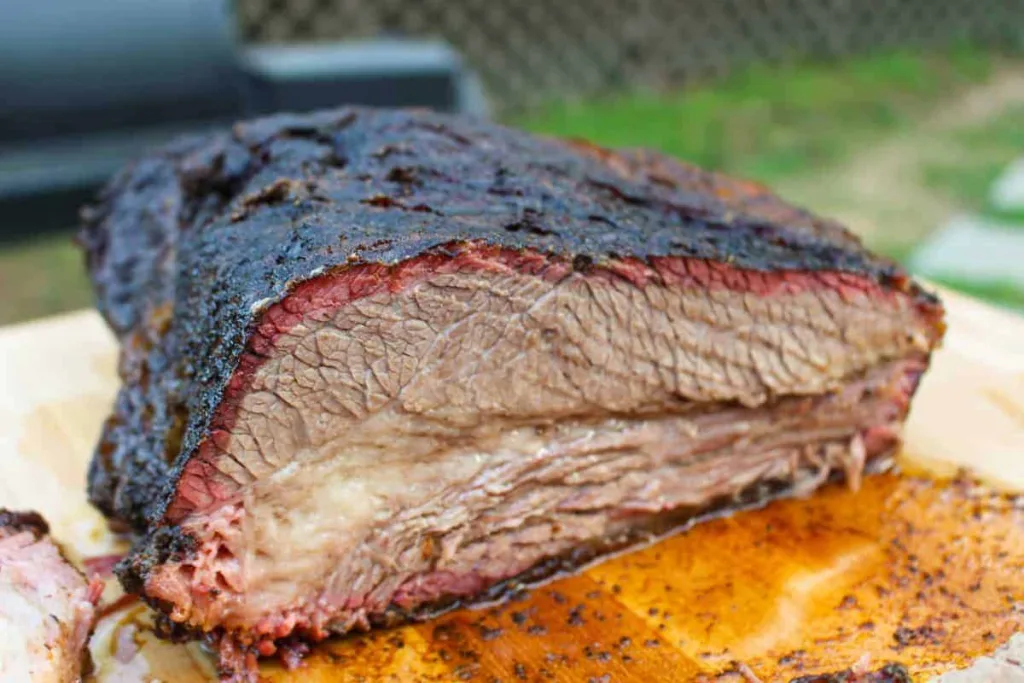
Texas brisket is defined by its simplicity: a carefully trimmed whole beef brisket seasoned with salt and black pepper, smoked “low and slow” over post oak wood until meltingly tender, deeply smoky, and crowned with a peppery bark. No elaborate rubs or sugary sauces—just classic technique and the best beef you can find.
Tools Needed to Smoke Brisket
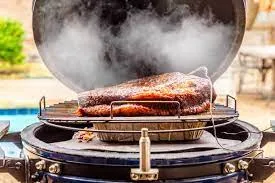
Precision and consistency are key to professional brisket. Here’s what you need for authentic results:
- Smoker: Offset, pellet, or high-quality electric smoker (preferably with capacity for full-size packer brisket)
- High-Quality Meat Thermometer: A dual-probe digital thermometer allows you to monitor both meat and chamber temperatures
- Charcoal and Wood: Hardwood lump charcoal and post oak wood logs or chunks (pecan or hickory as substitutes)
- Sharp Boning or Trimming Knife: Essential for clean, precise trimming
- Large Cutting Board: Non-slip and easy to sanitize
- Butcher Paper (Preferred) or Heavy-Duty Foil: For wrapping
- Spray Bottle: For spritzing during the cook
- Heat-Resistant Gloves: For safe handling of hot meat and equipment
- Cooler or Insulated Box: For resting the brisket post-cook
- Disposable Foil Pans: To catch drippings (optional)
- Tongs and Spatula: For maneuvering the brisket
Selecting and Trimming the Brisket

Choosing Your Brisket
For the most flavorful and juicy results, purchase a whole packer brisket (12–14 pounds) with both the flat and point muscles intact. Look for:
- Prime or Choice grade beef for optimal marbling
- Even thickness, especially in the flat
- Good fat coverage without excessive hard fat
How to Trim a Brisket
- Start Cold: Chilled brisket is easier to trim cleanly.
- Remove Silver Skin: Use your boning knife to gently shave away the tough silver membrane on the meat side.
- Trim the Fat Cap: Reduce the fat cap to an even ¼ inch, removing only the hard, waxy fat that won’t render.
- Square the Sides: Neaten any thin or jagged edges so the brisket cooks evenly.
- Isolate the Point and Flat: Separate excessive fat between the two muscles, but do not detach them.
- Shape the Brisket: For even cooking, ensure a smooth, slightly aerodynamic profile.
Professional Tip: Save trimmed fat for rendering into tallow or use it in side dishes for enhanced flavor.
Ingredients for Texas Smoked Brisket
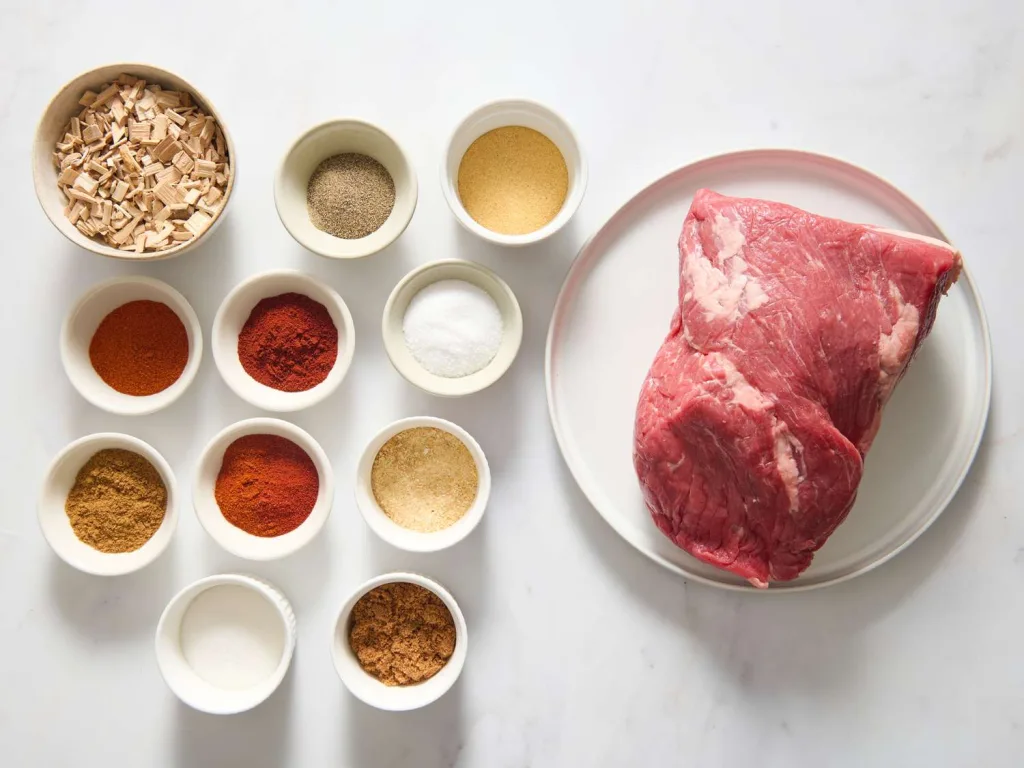
Classic Texas brisket is about simplicity and quality. Here is the gold-standard ingredient list:
- 1 whole packer brisket (12–14 lbs)
- ¼ cup kosher salt
- ¼ cup freshly cracked black pepper (16-mesh grind recommended)
- (Optional) 1 tbsp granulated garlic or garlic powder
- (Optional) 1 tbsp smoked paprika
- 2 tbsp yellow mustard or Worcestershire sauce (binder)
- Apple cider vinegar or beef broth (for spritzing)
How to Season the Brisket
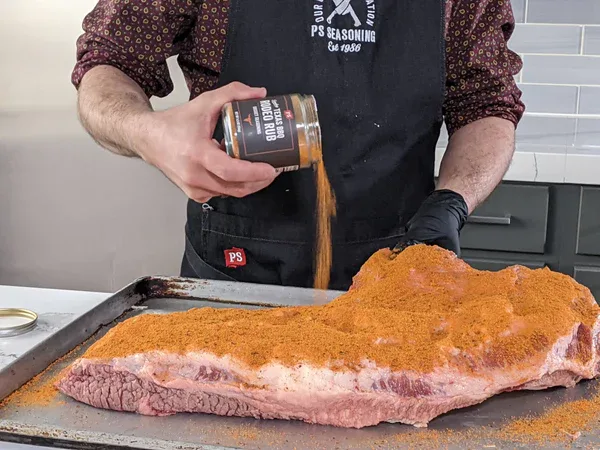
- Apply Binder: Coat the brisket lightly with yellow mustard or Worcestershire sauce to help the rub adhere.
- Mix Rub: Combine equal parts kosher salt and black pepper in a bowl. Add garlic or paprika only if desired, but purists recommend only salt and pepper.
- Season Generously: Pat the rub onto all sides of the brisket, ensuring complete and even coverage. Let sit at room temperature while you prepare the smoker (30–60 minutes).
Prepping the Smoker
- Fuel Selection: Use hardwood lump charcoal as a base, then add post oak wood for classic Texas flavor.
- Preheat: Stabilize the smoker’s temperature between 225°F and 250°F.
- Humidity: Place a water pan in the smoker to maintain a moist cooking environment.
How Long to Smoke a Brisket
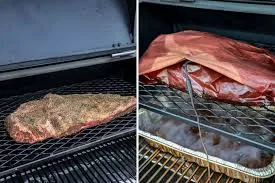
A large packer brisket will take 12 to 16 hours to smoke, depending on weight and smoker temperature. Use the “1 to 1.25 hours per pound” guideline at 225°F, but always cook to temperature and texture—not time alone.
The “First Smoke” (Unwrapped Phase)

- Position Brisket: Place brisket on the grates, fat cap down (for offset smokers) or fat cap up (for vertical/pellet smokers with indirect heat).
- Monitor Temperature: Insert a probe into the thickest part of the flat.
- Do Not Disturb: Keep the lid closed; resist the temptation to frequently check.
- Spritzing: After the first 3 hours, lightly spritz with apple cider vinegar every 1–2 hours to maintain bark moisture.
- Build Bark: Continue smoking until a dark, robust bark forms and the internal temperature reaches 165°F (usually after 6–8 hours).
How to Wrap a Brisket
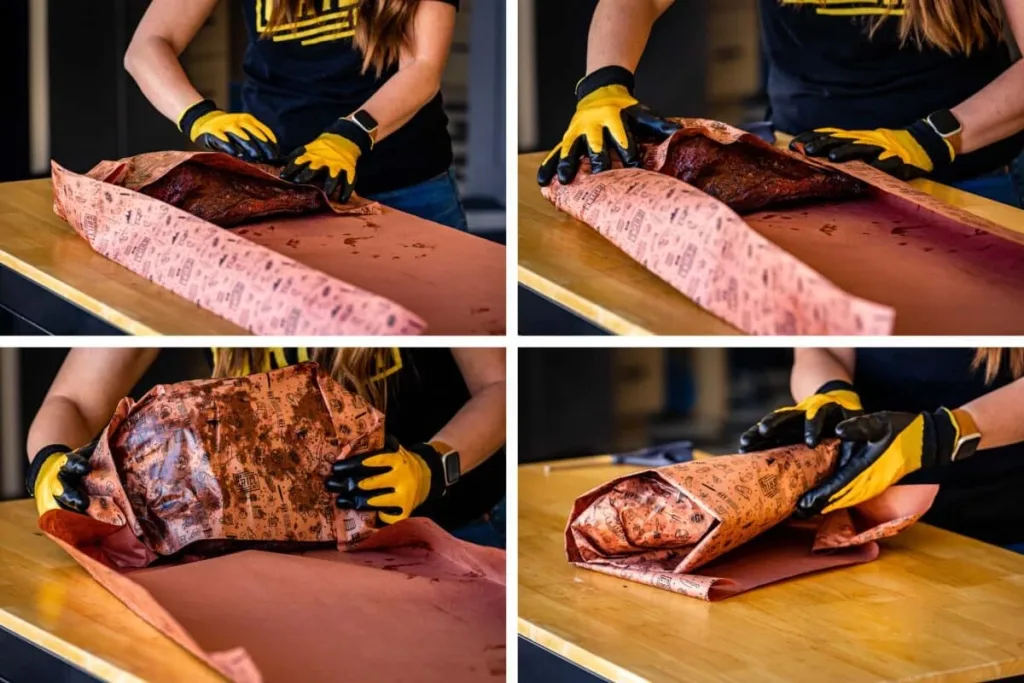
Wrapping (a.k.a. “The Texas Crutch”)
Wrapping helps push the brisket through the stall—a phase where evaporative cooling can cause temperature to plateau.
- When to Wrap: At 165°F internal temp, or when the bark is dark and set (does not rub off easily).
- How to Wrap: Lay out a large sheet of unwaxed butcher paper or heavy-duty foil. Place brisket in the center, fold tightly, and ensure seams are down when returning to the smoker.
Butcher paper is preferred for maintaining bark integrity while still preserving moisture.
Smoking to Perfection (Wrapped Phase)
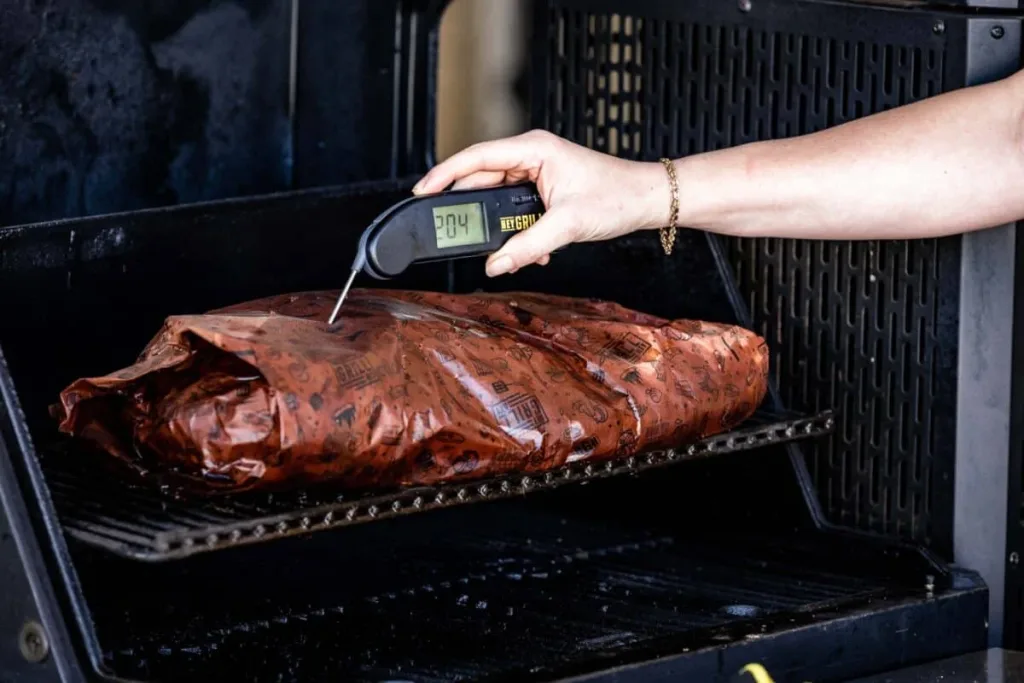
- Continue Cooking: Place the wrapped brisket back into the smoker.
- Monitor Internal Temperature: Smoke until the brisket reaches 200–203°F in the thickest part of the flat.
- The “Probe Test”: Insert a probe or skewer; it should slide in with zero resistance, “like butter.” Texture is more important than an exact number.
How Long to Rest Brisket
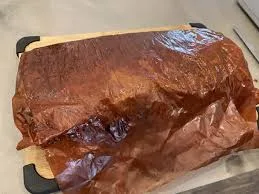
Resting is absolutely critical for professional results.
- Rest Minimum: 1 hour
- Ideal Rest: 2–4 hours (for larger briskets, up to 6 hours is beneficial)
- How to Rest: Place the wrapped brisket in a cooler or insulated box. Let the temperature gradually fall to about 145–160°F before slicing.
This resting period allows juices to redistribute throughout the meat, ensuring every bite is moist and tender.
Slicing and Serving
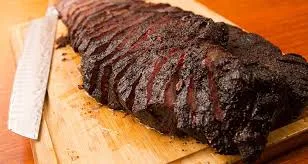
- Unwrap Brisket: Carefully remove from the paper or foil, reserving juices if desired.
- Identify the Grain: The flat and point muscles run in different directions—study the cut before slicing.
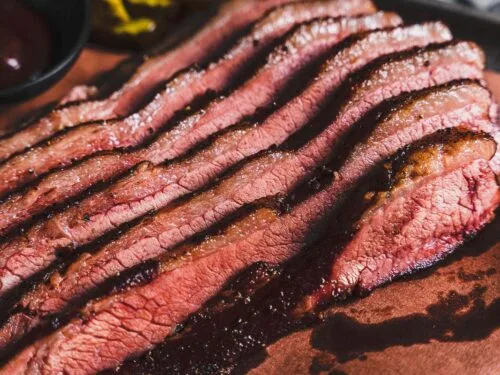
- Slice Against the Grain: Cut the flat into ¼-inch slices against the grain. The point can be cubed for burnt ends or sliced as desired.
- Serve Immediately: For best results, serve immediately after slicing to retain juiciness.
What to Serve with Smoked Brisket
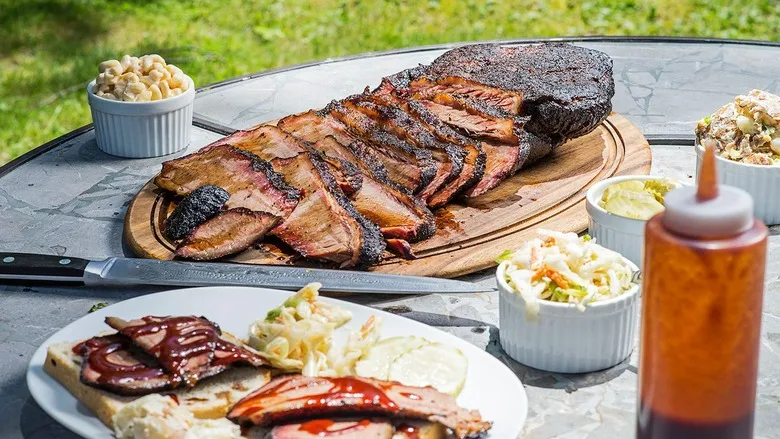
Brisket is a showstopper but truly shines when paired with classic barbecue sides. Consider these accompaniments:
- Texas-style white bread or brioche rolls
- Pickles (dill and spicy) and sliced onions
- Jalapeño or classic coleslaw
- Potato salad or smoked mac and cheese
- Baked beans or charro beans
- Cornbread or hush puppies
- Tangy barbecue sauce (served on the side, never over the brisket)
For a traditional platter, keep sides light and acidic to balance the brisket’s richness.
Variations for Smoked Brisket
Though salt and pepper are the Texas tradition, you can adapt this recipe for unique flavors:
- Spicy Brisket: Add cayenne or chipotle powder to your rub for extra heat.
- Sweet Bark: Sprinkle turbinado sugar in your rub for a subtle sweetness and enhanced caramelization.
- Coffee-Crusted: Add finely ground coffee to the rub for deep, earthy complexity.
- Asian-Inspired: Baste with soy sauce, ginger, and sesame oil during smoking and serve with kimchi.
- Burnt Ends: Cube the point, toss with sauce, and smoke further for rich, caramelized burnt ends.
Ingredients Recap
- 1 whole packer brisket (12–14 lbs)
- ¼ cup kosher salt
- ¼ cup coarse black pepper (16-mesh grind)
- (Optional) 1 tbsp granulated garlic
- 2 tbsp yellow mustard or Worcestershire (binder)
- Apple cider vinegar or beef broth (for spritzing)
Full Instructions: Step-by-Step
- Trim brisket cold, reducing fat cap to ¼ inch and removing silver skin.
- Coat brisket with mustard or Worcestershire to act as a binder.
- Mix salt and pepper, adding garlic or paprika if desired. Season all sides generously.
- Let brisket rest at room temperature while you prepare your smoker.
- Preheat smoker to 225–250°F with post oak wood and water pan.
- Place brisket in smoker, insert thermometer probe in the flat, fat cap down (offset) or up (vertical/pellet).
- Smoke undisturbed for 3 hours, then spritz with apple cider vinegar every 1–2 hours.
- Once bark is deep and internal temp is 165°F (6–8 hours), wrap tightly in butcher paper or foil.
- Return to smoker and continue until internal temperature reaches 200–203°F (total 12–16 hours).
- Remove from smoker and rest, still wrapped, in a cooler or insulated box for 2–4 hours.
- Unwrap, identify grain, slice flat across grain in ¼-inch slices, cube point for burnt ends.
- Serve immediately with your favorite sides.
Cook and Prep Times
- Prep Time: 45 minutes (trimming, seasoning, preheating)
- Smoking Time: 12–16 hours
- Resting Time: 2–4 hours
- Total Time: Up to 20 hours (for best results, plan ahead and start early)
Yield and Servings
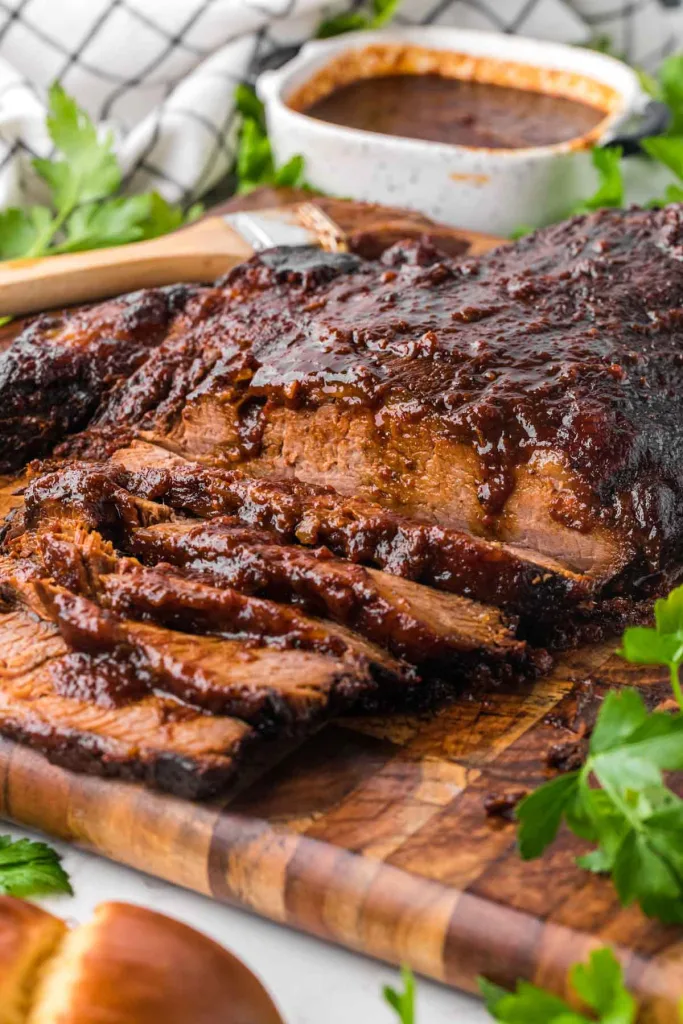
- Yield: 1 brisket (approx. 6–8 lbs after cooking)
- Servings: 12–16 (based on 6 oz per serving)
Nutritional Information (per 6 oz. serving)
- Calories: ~390
- Protein: 32g
- Total Fat: 28g
- Saturated Fat: 11g
- Carbohydrates: 0g
- Fiber: 0g
- Sugar: 0g
- Sodium: 410mg
- Cholesterol: 95mg
Nutrition values will vary with fat trimming and specific rub ingredients.
Final Professional Tips
- Always cook to temperature and tenderness, not by the clock. Each brisket is unique.
- Maintain clean smoke: Thin blue smoke imparts flavor; thick white smoke can make meat bitter.
- Allow ample rest time: Never rush slicing—rested brisket is juicier and more tender.
- Use high-quality beef and wood: These are the foundations of exceptional brisket.
By following this definitive Texas-style smoked beef brisket guide, you’ll deliver a brisket worthy of the most discerning barbecue judges or a proud family gathering. Respect the process, and you’ll be rewarded with an unrivaled barbecue centerpiece—smoky, peppery, perfectly tender, and unmistakably Texan.