The Perfect Salmon with Creamy Dijon Sauce – How to Cook, Plate & Serve Like a Chef
Perfect salmon is a matter of technique and balance — a crisp golden crust on the outside, tender and flaky inside, with flavors that complement rather than overpower. This Perfect Salmon with Creamy Dijon Sauce is a masterclass in combining home-cook accessibility with professional restaurant techniques. By pan-searing the salmon first, you lock in the juices and develop that irresistible crust; finishing in the oven ensures it’s cooked evenly to perfection. The silky Dijon cream sauce, made in the same pan, soaks up all the caramelized goodness left behind. The result? An elegant dish that’s equally suited for busy weeknights and special occasions.
Overview of Salmon with Creamy Dijon Sauce
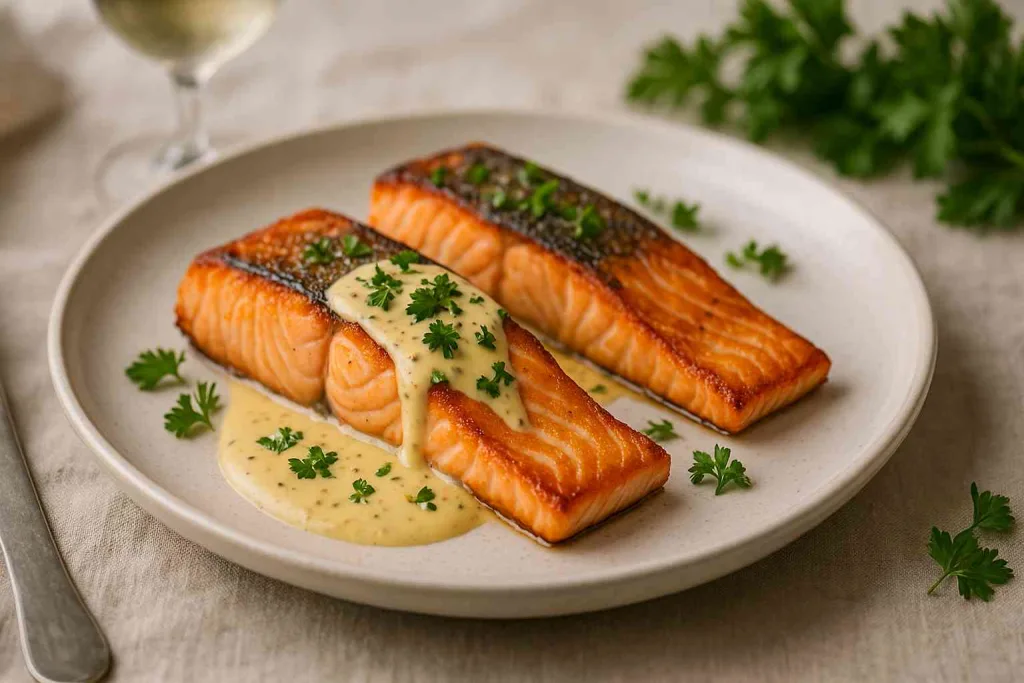
This salmon recipe uses a pan-sear + oven-finish method favored by top chefs for precision cooking. It starts with high-heat searing to create texture and flavor, followed by a gentle oven bake for perfectly even doneness. The creamy Dijon sauce — a luxurious blend of white wine, garlic, heavy cream, and mustard — is prepared in the same skillet, making it both flavorful and efficient. The process takes just 25 minutes from start to finish, yet the end result is worthy of a fine dining menu. You’ll also learn expert tips for achieving crisp skin, preventing sticking, and balancing rich and tangy flavors.
Ingredients with Sourcing Tips

For the Salmon:
- 4 salmon fillets (6 oz each, skin-on preferred) – Go for wild-caught Alaskan or sockeye salmon for the best flavor and sustainability. Look for firm, bright flesh without a strong fishy smell.
- Salt and freshly ground black pepper – Flaky sea salt like Maldon enhances texture; grind pepper fresh for aromatic depth.
- 2 tbsp olive oil – A high-quality extra virgin olive oil with a high smoke point ensures a crisp sear without bitterness.
For the Creamy Dijon Sauce:
- 2 tbsp unsalted butter – European-style butter (82% butterfat) for richer mouthfeel.
- 3 cloves garlic, minced – Fresh garlic only; pre-minced often tastes bitter.
- ½ cup dry white wine – Sauvignon Blanc or Pinot Grigio adds acidity without overpowering; avoid sweet wines.
- 1 cup heavy cream – Look for cream with at least 36% milkfat for stability.
- 2 tbsp Dijon mustard – Choose authentic French Dijon for depth and tang.
- 1 tsp whole-grain mustard – Adds texture and complexity.
- 1 tbsp lemon juice – Always fresh-squeezed; bottled loses vibrancy.
- 2 tbsp fresh parsley, chopped – Flat-leaf parsley balances richness with freshness.
Pro sourcing note: If salmon is out of season locally, frozen wild-caught salmon (thawed slowly in the fridge) is often higher quality than fresh farmed fish.
How to Make Salmon with Creamy Dijon Sauce
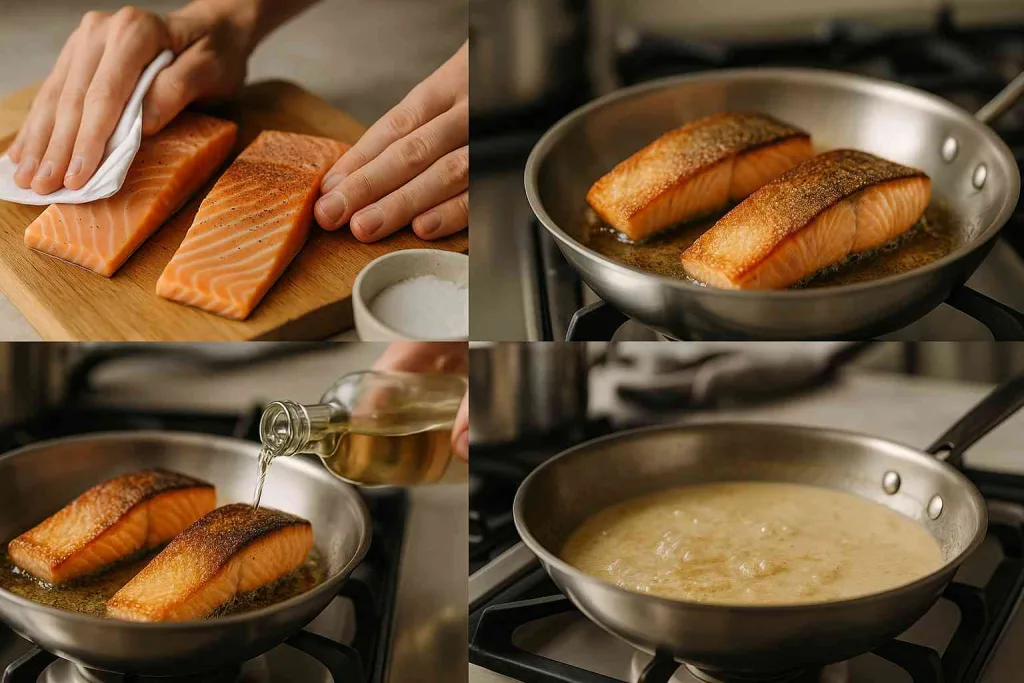
- Pat Salmon Completely Dry: Excess moisture steams rather than sears, so press firmly with paper towels.
- Season Just Before Cooking: Salt draws out moisture; seasoning too early can soften the crust.
- Preheat the Skillet: Heat until just smoking for maximum browning.
- Oil the Fish, Not the Pan: Prevents sticking and allows even oil coverage.
- Skin-Side Down First: Protects delicate flesh and crisps skin beautifully.
- Gentle Press: Hold fillets down for 10 seconds to prevent curling.
- Basting During Sear: Spoon hot oil over the flesh to promote color and flavor.
- Oven Finish: Transfer to oven for consistent cooking without over-searing.
- Use Carryover Heat: Remove from oven just shy of target temp — it will rise as it rests.
- Deglaze for Flavor: The browned fond in the pan is pure gold for the sauce.
Step-by-Step Instructions
- Preheat the Oven: Set to 400°F (200°C). Place rack in center position.
- Prep Salmon: Pat fillets dry. Season generously with salt and pepper. Lightly brush all sides with olive oil.
- Sear the Skin Side: Heat skillet over medium-high until hot. Place salmon skin-side down; press gently with spatula for 10 seconds. Sear for 3 minutes.
- Flip and Sear: Turn carefully, sear flesh side for 1 minute.
- Finish in Oven: Transfer skillet to oven; bake 5–7 minutes or until salmon reaches 125°F (52°C).
- Rest: Remove from pan; tent loosely with foil for 5 minutes.
- Make Sauce: Return skillet to medium heat, add butter. Once melted, sauté garlic for 30 seconds.
- Deglaze: Pour in wine; scrape browned bits. Reduce by half.
- Cream & Mustard: Stir in cream, Dijon, and whole-grain mustard. Simmer gently 2–3 minutes.
- Finish: Add lemon juice and parsley. Plate salmon, spoon sauce over, garnish, and serve.
Cook & Prep Times
- Prep Time: 10 minutes
- Cook Time: 15 minutes
- Total Time: 25 minutes
Nutrition Information (Per Serving) (approximate)
- Calories: 480 kcal
- Protein: 34g
- Fat: 32g
- Carbohydrates: 3g
- Fiber: 0g
- Sugar: 1g
- Sodium: 460mg
Serving of Salmon with Creamy Dijon Sauce

For an elegant plate, serve salmon atop a mound of creamy mashed potatoes or beside a buttery wild rice pilaf. Add a side of bright green vegetables — such as steamed asparagus, haricots verts, or sautéed broccolini — to cut through the richness. For color and sweetness, roasted baby carrots glazed in honey make a beautiful pairing. Garnish with a sprinkle of fresh herbs and a lemon wedge for freshness. Serve with a crisp, chilled Sauvignon Blanc or dry rosé for balance. For a non-alcoholic pairing, sparkling mineral water with lemon or a cucumber-mint cooler works wonderfully.
Pro Chef Notes & Variations
- Skinless Salmon: Shorten sear time and use parchment for baking.
- Herb Variations: Swap parsley for dill, chives, or tarragon.
- Sauce Enrichment: Add crème fraîche for extra tang.
- No-Wine Alternative: Use chicken broth with a splash of lemon juice.
- Spicy Kick: Add cayenne or smoked paprika to seasoning.
- Meal Prep: Cook underdone, cool, store separately from sauce; reheat gently.
- Luxury Touch: Fold in caviar or serve with a quenelle of herbed butter.
Buying & Sustainability Guide for Salmon
Choosing salmon wisely impacts both flavor and the environment. Wild-caught Alaskan salmon is the gold standard — sustainably managed, rich in omega-3s, and with superior taste. Sockeye offers deep red flesh and bold flavor, while King (Chinook) salmon delivers unmatched buttery richness. If wild isn’t available, look for responsibly farmed salmon certified by the Aquaculture Stewardship Council (ASC). Avoid fillets with a dull surface or strong odor. Frozen wild-caught can be an excellent choice — thaw overnight in the refrigerator for best results.
Wine Pairing Deep Dive
The creamy Dijon sauce has richness from cream and butter, acidity from wine and lemon, and tang from mustard — making it ideal for a wine with bright acidity to cut through the fat. Sauvignon Blanc is classic, with citrus and herbal notes that complement the parsley. Chablis (unoaked Chardonnay) offers mineral complexity, while a dry rosé provides freshness and a touch of fruitiness. Avoid heavy, oaky Chardonnays, which can overpower the dish. If you prefer red wine, a light Pinot Noir works with salmon’s richness without clashing with the sauce.
Plating & Garnish Techniques
For a restaurant-worthy presentation, plate salmon at a 45° angle, skin-side up, over your chosen starch. Spoon the Dijon cream sauce in a pool beneath the fish to keep the skin crisp. Arrange vegetables with height for visual appeal. Use microgreens or finely chopped herbs as a finishing sprinkle. Wipe the rim of the plate before serving to ensure a clean presentation. For added drama, serve on a warm white plate — the sauce’s golden hue pops beautifully.
Troubleshooting Common Mistakes
- Skin Sticking to the Pan: Ensure the pan is hot before adding salmon and avoid moving it prematurely.
- Overcooked Salmon: Use an instant-read thermometer and pull at 125°F (52°C) for medium-rare.
- Broken Sauce: Avoid boiling cream; keep at a gentle simmer.
- Bland Flavor: Season generously and don’t skip deglazing — the fond is flavor gold.
- Curled Skin: Press down gently during the first 10 seconds of searing to keep skin flat.
Culinary Science Behind the Sear & Sauce
Searing salmon initiates the Maillard reaction, a series of complex chemical changes between amino acids and sugars that create a golden crust and deep, savory flavor. The skin acts as insulation, protecting the flesh from overcooking. Finishing in the oven uses gentle, even heat to avoid drying out the fish. The sauce benefits from emulsification, where fat (cream, butter) blends with water-based ingredients (wine, mustard) into a smooth, cohesive texture. Keeping heat moderate prevents the sauce from separating, while whisking continuously helps maintain a velvety consistency.